A relational data stream management system (RDSMS) is a distributed, in-memory data stream management system (DSMS) that is designed to use standards-compliant SQL queries to process unstructured and structured data streams in real-time. Unlike SQL queries executed in a traditional RDBMS, which return a result and exit, SQL queries executed in a RDSMS do not exit, generating results continuously as new data become available. Continuous SQL queries in a RDSMS use the SQL Window function to analyze, join and aggregate data streams over fixed or sliding windows. Windows can be specified as time-based or row-based. == RDSMS SQL Query Examples == Continuous SQL queries in a RDSMS conform to the ANSI SQL standards. The most common RDSMS SQL query is performed with the declarative SELECT statement. A continuous SQL SELECT operates on data across one or more data streams, with optional keywords and clauses that include FROM with an optional JOIN subclause to specify the rules for joining multiple data streams, the WHERE clause and comparison predicate to restrict the records returned by the query, GROUP BY to project streams with common values into a smaller set, HAVING to filter records resulting from a GROUP BY, and ORDER BY to sort the results. The following is an example of a continuous data stream aggregation using a SELECT query that aggregates a sensor stream from a weather monitoring station. The SELECTquery aggregates the minimum, maximum and average temperature values over a one-second time period, returning a continuous stream of aggregated results at one second intervals. RDSMS SQL queries also operate on data streams over time or row-based windows. The following example shows a second continuous SQL query using the WINDOW clause with a one-second duration. The WINDOW clause changes the behavior of the query, to output a result for each new record as it arrives. Hence the output is a stream of incrementally updated results with zero result latency.
Cyborg
A cyborg () is a being with both organic and biomechatronic body parts. It is a portmanteau of cybernetic and organism. The term was coined in 1960 by Manfred Clynes and Nathan S. Kline. In contrast to biorobots and androids, the term cyborg applies to a living organism that has undergone restoration of function or enhancements of abilities due to the integration of some artificial component or technology that relies on feedback. == Description and definition == Alternative names for a cyborg include cybernetic organism, cyber-organism, cyber-organic being, cybernetically enhanced organism, cybernetically augmented organism, technorganic being, techno-organic being, and techno-organism. Unlike bionics, biorobotics, or androids, a cyborg is an organism that has restored function or, especially, enhanced abilities due to the integration of some artificial component or technology that relies on some sort of feedback, for example: prostheses, artificial organs, implants or, in some cases, wearable technology. Cyborg technologies may enable or support collective intelligence. A related idea is the "augmented human". While cyborgs are commonly thought of as mammals, including humans, the term can apply to any organism. === Placement and distinctions === D. S. Halacy's Cyborg: Evolution of the Superman (1965) featured an introduction which spoke of a "new frontier" that was "not merely space, but more profoundly the relationship between 'inner space' to 'outer space' – a bridge...between mind and matter." In "A Cyborg Manifesto", Donna Haraway rejects the notion of rigid boundaries between humanity and technology, arguing that, as humans depend on more technology over time, humanity and technology have become too interwoven to draw lines between them. She believes that since we have allowed and created machines and technology to be so advanced, there should be no reason to fear what we have created, and cyborgs should be embraced because they are part of human identities. However, Haraway has also expressed concern over the contradictions of scientific objectivity and the ethics of technological evolution, and has argued that "There are political consequences to scientific accounts of the world." === Biosocial definition === According to some definitions of the term, the physical attachments that humans have with even the most basic technologies have already made them cyborgs. In a typical example, a human with an artificial cardiac pacemaker or implantable cardioverter-defibrillator would be considered a cyborg, since these devices measure voltage potentials in the body, perform signal processing, and can deliver electrical stimuli, using a synthetic feedback mechanism to keep that person alive. Implants, especially cochlear implants, that combine mechanical modification with any kind of feedback response are also cybernetic enhancements. Some theorists cite such modifications as contact lenses, hearing aids, smartphones, or intraocular lenses as examples of fitting humans with technology to enhance their biological capabilities. The emerging trend of implanting microchips inside the body (mainly the hands), to make financial operations like a contactless payment, or basic tasks like opening a door, has been erroneously marketed as more recent examples of cybernetic enhancement. The latter has not yet seen significant traction outside niche areas in Scandinavia and in actual function is little more than a pre-programmed Radio-frequency identification (RFID) microchip encased in glass that does not interact with the human body (it is the same technology used in the microchips injected into animals for ease of identification), thus not fitting the definition of a cybernetic implant. As cyborgs currently are on the rise, some theorists argue there is a need to develop new definitions of aging. For instance, a bio-techno-social definition of aging has been suggested. The term is also used to address human-technology mixtures in the abstract. This includes not only commonly used pieces of technology such as phones, computers, the Internet, and so on, but also artifacts that are not usually considered technology; for example, pen and paper, and speech and language. When augmented with these technologies and connected in communication with people in other times and places, a person becomes capable of more than they were before. An example is a computer, which gains power by using Internet protocols to connect with other computers. Another example is a social-media bot—either a bot-assisted human or a human-assisted-bot—used to target social media with likes and shares. Cybernetic technologies thus include highways, pipes, electrical wiring, buildings, electrical plants, libraries, and other infrastructural constructs. Bruce Sterling, in his Shaper/Mechanist universe, suggested an idea of an alternative cyborg called 'Lobster', which is made not by using internal implants, but by using an external shell (e.g. a powered exoskeleton). The computer game Deus Ex: Invisible War prominently features cyborgs called Omar, Russian for 'lobster'. === Evolutionary perspective === In 1994, Hans Hass formulated a scientific view of the human-machine hybrids he called "hypercells". They can expand their biological cell body with artificial artifacts and thus expand their performance body. The theory of hypercells or Homo proteus, as Hass called the human-machine hybrid to distinguish Homo sapiens, extends Charles Darwin's theory of evolution and deals with the course of evolution beyond humans. In his 2019 book Novacene, James Lovelock used the term "cyborgs" to refer to the next generation of beings who will become the "understanders of the future" and "lead the cosmos to self-knowledge". While acknowledging the organic component in Clynes' and Kline's definition, he proposed that these cyborgs "will have designed and built themselves from the artificial intelligence systems we have already constructed", and used the term cyborg "to emphasize that the new intelligent beings will have arisen, like us, from Darwinian evolution." == Origins == The concept of a man-machine mixture was widespread in science fiction before World War II. As early as 1843, Edgar Allan Poe described a man with extensive prostheses in the short story "The Man That Was Used Up". In 1911, Jean de La Hire introduced the Nyctalope, a science fiction hero who was perhaps the first literary cyborg, in Le Mystère des XV (later translated as The Nyctalope on Mars). Nearly two decades later, Edmond Hamilton presented space explorers with a mixture of organic and machine parts in his 1928 novel The Comet Doom. He later featured the talking, living brain of an old scientist, Simon Wright, floating in a transparent case, and in all the adventures of his famous hero, Captain Future. In 1944, in the short story "No Woman Born", C. L. Moore wrote of Deirdre, a dancer, whose body was burned completely and whose brain was placed in a faceless but beautiful and supple mechanical body. In 1960, the term "cyborg" was coined by Manfred E. Clynes and Nathan S. Kline to refer to their conception of an enhanced human being who could survive in extraterrestrial environments: For the exogenously extended organizational complex functioning as an integrated homeostatic system unconsciously, we propose the term 'Cyborg'. Their concept was the outcome of thinking about the need for an intimate relationship between human and machine as the new frontier of space exploration was beginning to develop. A designer of physiological instrumentation and electronic data-processing systems, Clynes was the chief research scientist in the Dynamic Simulation Laboratory at Rockland State Hospital in New York. The term first appears in print 5 months earlier when The New York Times reported on the "Psychophysiological Aspects of Space Flight Symposium" where Clynes and Kline first presented their paper: A cyborg is essentially a man-machine system in which the control mechanisms of the human portion are modified externally by drugs or regulatory devices so that the being can live in an environment different from the normal one. Thereafter, Hamilton would first use the term "cyborg" explicitly in the 1962 short story, "After a Judgment Day", to describe the "mechanical analogs" called "Charlies," explaining that "[c]yborgs, they had been called from the first one in the 1960s...cybernetic organisms." The 1972 novel Cyborg by Martin Caidin introduced the character of bionic government agent Steve Austin, and was adapted into the popular television series The Six Million Dollar Man, which ran from 1973 to 1978. In 2001, a book titled Cyborg: Digital Destiny and Human Possibility in the Age of the Wearable computer was published by Doubleday. Some of the ideas in the book were incorporated into the documentary film Cyberman that same year. == Cyborg tissues in engineering == Cyborg tissues structured with carbon nanotubes and plan
ASR-complete
ASR-complete is, by analogy to "NP-completeness" in complexity theory, a term to indicate that the difficulty of a computational problem is equivalent to solving the central automatic speech recognition problem, i.e. recognize and understanding spoken language. Unlike "NP-completeness", this term is typically used informally. Such problems are hypothesised to include: Spoken natural language understanding Understanding speech from far-field microphones, i.e. handling the reverbation and background noise These problems are easy for humans to do (in fact, they are described directly in terms of imitating humans). Some systems can solve very simple restricted versions of these problems, but none can solve them in their full generality.
Nolot
Nolot is a chess test suite with 11 positions from real games. They were compiled by Pierre Nolot (French: [nɔ.lo]) for the French chess magazine Gambisco and posted on the rec.games.chess Usenet group in 1994. They were designed to be particularly hard to solve for chess engines to solve at the time, although modern engines can find a solution near-instantaneously. == Problem 1 == FEN: r3qb1k/1b4p1/p2pr2p/3n4/Pnp1N1N1/6RP/1B3PP1/1B1QR1K1 w - - 0 1 26.Nxh6!! c3 (26... Rxh6 27.Nxd6 Qh5 (best) 28.Rg5! Qxd1 29.Nf7+ Kg8 30.Nxh6+ Kh8 31.Rxd1 c3 32.Nf7+ Kg8 33.Bg6! Nf4 34.Bxc3 Nxg6 35.Bxb4 Kxf7 36.Rd7+ Kf6 37.Rxg6+ Kxg6 38.Rxb7 ±) 27.Nf5! cxb2 28.Qg4 Bc8 (28... g6!? 29.Kh2! 29.Qd7 30.Nh4 Bc6 31.Nc5! dxc 32.Rxe6 Nf6 33.Nxg6+ Kg7 34.Qg5 Nbd5 35.Ne5 Kh8 36.Nxd7 ±) 29.Qh4+ Rh6 30.Nxh6 gxh6 31.Kh2! Qe5 32.Ng5 Qf6 33.Re8 Bf5 34.Qxh6 (missing a mate in 6: 34.Nf7+ Qxf7 35.Qxh6+ Bh7 36.Rxa8 Nf6 37.Rxf8 Qxf8 38.Qxf8+ Ng8 39.Qg7#) 34...Qxh6 35.Nf7+ Kh7 36.Bxf5+ Qg6 37.Bxg6+ Kg7 38.Rxa8 Be7 39.Rb8 a5 40.Be4+ Kxf7 41.Bxd5+ 1–0 The best Novag computer, the Diablo 68000, finds 26. Nxh6 after seven and a half months (Pierre Nolot has let it run on the position for 14 months and one day, until a power failure stopped an analysis of over 80,000,000,000 nodes.) but for wrong reasons: it evaluates white's position as inferior and thinks this move would enable it to draw. Today Gambit Tiger 2.0 for example can find it quite quickly: Most free engines running on 64-bit processors in 2010 could solve this problem and the others in a few seconds. 1.Qd4 c3 2.Bxc3 Nxc3 3.Qxb4 Nxe4 4.Qxb7 Rb8 5.Qxb8 Qxb8 6.Bxe4 d5 7.Rb1 μ (-1.20) Depth: 12 00:00:09 6055 kN 1.Nxh6 c3 2.Nf5 cxb2 3.Qg4 Rb8 4.Nxg7 Rg6 5.Qxg6 Qxg6 6.Rxg6 Bxg7 7.Nxd6 ³ (-0.48) Depth: 12 00:00:21 14368 kN 1.Nxh6 c3 2.Nf5 cxb2 3.Qg4 Rc8 4.Nxg7 Rg6 5.Nxe8 Rxg4 6.Rxg4 Rxe8 7.Rg6 μ (-0.74) Depth: 13 00:00:55 38455 kN 1.Ne3 Rxe4 2.Bxe4 Qxe4 3.Nxd5 Qxd5 4.Qc1 Qf5 5.Qxh6+ Qh7 6.Qe6 Nd3 7.Re2 Nxb2 8.Rxb2 ³ (-0.58) Depth: 13 00:01:30 62979 kN 1.Ne3 Rxe4 ³ (-0.58) Depth: 14 00:02:02 84941 kN 1.Ne3 Nxe3 2.Rexe3 Bxe4 3.Qg4 Rg6 4.Qxe4 Qxe4 5.Bxe4 Rxg3 6.Rxg3 d5 7.Bf5 Re8 8.Bc3 ³ (-0.30) Depth: 15 00:03:05 128968 kN 1.Nxh6 ² (0.32) Depth: 15 00:07:58 350813 kN With the next ply showing a clear advantage. Stockfish 14dev 64bit 4CPU running on 2020 hardware recognises the significance of Nxh6!! in 1 second. Stockfish_21092606_x64_avx2: NNUE evaluation using nn-13406b1dcbe0.nnue enabled. 19/32 00:01 7708k 4882k +3,00 Nxh6 Rxh6 Nxd6 Qh5 Bg6 Qxd1 Nf7+ Kg8 Nxh6+ gxh6 Bh5+ Kh7 Rxd1 c3 Bxc3 Nxc3 Rd7+ Kh8 Rxb7 Ne4 Re3 Nxf2 Kxf2 Bc5 Ke2 Bxe3 Kxe3 Nd5+ Kf2 49/73 15:02 5118270k 5673k +6,15 Nxh6 Rxh6 Nxd6 Qh5 Rg5 Qxd1 Nf7+ Kg8 Nxh6+ Kh8 Rxd1 c3 Nf7+ Kg8 Bg6 Nf4 Bxc3 Nbd5 Rb1 Bc6 Bd2 Nxg6 Rxg6 Ne7 Rxc6 Nxc6 Rb6 Rc8 Ng5 a5 Ra6 Bb4 Be3 Ne5 Bd4 Nc6 Bb6 Bd2 h4 Kf8 Bc5+ Kg8 Be3 Bxe3 fxe3 Kf8 Kf2 Ke7 Nf3 Kd7 Rb6 Ne7 Rb5 Kd6 Rxa5 Rc2+ Kg3 Re2 Nd4 Rxe3+ Kf4 Rd3 Nf5+ Kc7 Nxe7 == Problem 2 == FEN: r4rk1/pp1n1p1p/1nqP2p1/2b1P1B1/4NQ2/1B3P2/PP2K2P/2R5 w - - 0 1 22.Rxc5!! Nxc5 23.Nf6+ Kh8 24.Qh4 Qb5+ (computers think there is perpetual check here, but...) 25.Ke3! 25... h5 26.Nxh5 Qxb3+ (26... d5+ 27.Bxd5 Qd3 28.Kf2 Ne4+ 29.Bxe4 Qd4+ 30.Kg2 Qxb2+ 31.Kh3 ±) and White won in 41 moves. Today Deep Junior 8.ZX for example finds it very quickly (around 1 minute): 1.Kd1 Rac8 2.Bh6 Qb5 3.Rc3 Qf1+ 4.Kc2 Rc6 5.Bxf8 −+ (-2.11) Depth: 12 00:00:04 10422 kN 1.Nxc5 Nxc5 2.Rxc5 Qxc5 3.e6 Rae8 4.e7 Nc8 5.Kf1 Nxd6 6.Bf6 b5 −+ (-2.10) Depth: 12 00:00:14 25054 kN 1.Bf6! μ (-1.35) Depth: 12 00:00:17 34601 kN 1.Bf6 Qb5+ 2.Ke1 Bb4+ 3.Kf2 Bc5+ = (0.00) Depth: 12 00:00:20 34601 kN 1.Bf6 Qb5+ 2.Ke1 Nxf6 3.Nxf6+ Kg7 4.Nh5+ gxh5 5.Qf6+ Kg8 6.Qg5+ Kh8 7.Qf6+ = (0.00) Depth: 15 00:01:01 130544 kN 1.Rxc5! = (0.15) Depth: 15 00:01:12 145875 kN 1.Rxc5 Nxc5 2.Nf6+ Kh8 3.Qh4 Qb5+ 4.Ke3 h5 5.Nxh5 Qd3+ 6.Kf2 Ne4+ 7.fxe4 Qd4+ 8.Kf1 Qd3+ 9.Ke1 Qb1+ 10.Bd1 ± (2.18) Depth: 15 00:01:18 145875 kN Stockfish 14dev 64bit 4CPU running on 2020 hardware recognises the significance of Rxc5!! in 1 second. Stockfish_21092606_x64_avx2: NNUE evaluation using nn-13406b1dcbe0.nnue enabled. 21/25 00:01 5822k 5545k +6,61 Rxc5 Qxc5 Nxc5 Nxc5 Bh6 Nbd7 Bxf8 Rxf8 Qe3 Rc8 f4 Nxe5 Qxe5 Ne6 Bxe6 Rc2+ Kd3 Rxh2 46/86 11:27 5057055k 7355k +7,61 Rxc5 Qxc5 Nxc5 Nxc5 Bf6 Ne6 Qh6 Nd4+ Kf2 Nf5 Qg5 Nd7 h4 Nxf6 Qxf6 Ng7 d7 b5 Bd5 Rab8 b4 Nh5 Bxf7+ Rxf7 d8R+ Rxd8 Qxd8+ Rf8 Qd5+ Kg7 e6 Kf6 Qd7 Ng7 Qd4+ Kxe6 Qxg7 Rf7 Qc3 Ke7 Qc5+ Ke8 Qc8+ Ke7 h5 gxh5 Kg3 h4+ Kh2 h6 Qc5+ Kf6 Qxb5 Kg7 f4 Rxf4 Qe5+ Rf6 b5 h3 Qd4 Kg8 Qxf6 h5 Blacks 22. .. Nxc5 is suboptimal and leads faster mate 77/44 09:18 6987714k 12518k +M22 Nf6+ Kh8 Qh4 Qb5+ Ke3 Qxb3+ axb3 h5 Nxh5 Nd5+ Kd4 Ne6+ Kxd5 Nxg5 Qxg5 gxh5 f4 Rad8 f5 f6 Qxh5+ Kg7 Qg6+ Kh8 e6 b6 e7 Rb8 exf8Q+ Rxf8 Ke6 b5 Ke7 Rb8 Qh5+ Kg7 Qf7+ Kh8 Kxf6 Rf8 Qxf8+ Kh7 Qg7+ == Problem 3 == FEN: r2qk2r/ppp1b1pp/2n1p3/3pP1n1/3P2b1/2PB1NN1/PP4PP/R1BQK2R w KQkq - 0 1 12.Nxg5!! Bxd1 13.Nxe6 Qb8 14.Nxg7+!! Kf8 15.Bh6! Bg4 16.0-0+ Kg8 17.Rf4 ± White wins with a queen sac but black has defensive resources. Stockfish 8 64bit 3CPU running on 2016 hardware recognizes the significance of Nxg5!! in 55 seconds. Stockfish 14 dev (Stockfish_21092606_x64_avx2) 64bit 4CPU running on 2020 hardware recognizes the significance of Nxg5!! in 1 second. NNUE evaluation using nn-13406b1dcbe0.nnue enabled. 21/34 00:01 8291k 4530k +2,78 Nxg5 Bxd1 Nxe6 Qb8 Nxg7+ Kd8 Kxd1 b5 N3f5 Bf8 Rf1 Kc8 Nh5 Kb7 Bxb5 Ne7 g4 a6 Ba4 Nxf5 gxf5 Ka7 Nf4 c5 47/59 37:49 10390430k 4578k +3,16 Nxg5 Bxd1 Nxe6 Qb8 Nxg7+ Kd8 Kxd1 b5 Rf1 Kc8 N3f5 Bf8 Ne6 Kd7 Nf4 Ne7 g4 a5 Ke2 Qb7 h4 Ra6 a3 Kc8 Be3 Kb8 Kf3 Rb6 Bd2 Qc8 Kg3 c5 Be3 c4 Nxe7 Bxe7 Bf5 Qd8 h5 Qg8 Kh3 Bg5 Rf3 Ra6 Raf1 b4 Nxd5 Qxd5 Bxg5 bxc3 bxc3 Rb6 Be3 Rb3 Blacks 14 .. Kf8 is suboptimal and leads loss fast 41/68 06:31 3269727k 8350k +9,28 Bh6 Kg8 Rxd1 Bf8 N3h5 Bxg7 Nxg7 Qf8 Nf5 Ne7 Bxf8 Nxf5 Bxf5 Rxf8 Be6+ Kg7 Rd3 Rf4 Bxd5 c6 Rg3+ Kf8 Rf3 Rxf3 Bxf3 Kg7 Rf1 Re8 Be4 Re6 Ke2 a5 Ke3 Rh6 h3 a4 Kf4 Re6 h4 Re8 Ke3 h6 h5 Rf8 Rxf8 Kxf8 == Problem 4 == FEN: r1b1kb1r/1p1n1ppp/p2ppn2/6BB/2qNP3/2N5/PPP2PPP/R2Q1RK1 w kq - 0 1 10.Nxe6!! Qxe6 11.Nd5 Kd8 12.Bg4 Qe5 13.f4 Qxe4 (13...Qxb2 stronger but not sufficient: 14.Bxd7 Bxd7 15.Rb1 Qa3 16.Nxf6 Bb5 17.Qd4 Qc5 18.Rfd1 ±) 14.Bxd7 Bxd7 15.Nxf6 gxf6 16.Bxf6+ Kc7 17.Bxh8 and Black resigned on move 27. Stockfish 14dev 64bit 4CPU running on 2020 hardware recognises the significance of 10.Nxe6 in 1 second. Stockfish_21092606_x64_avx2: NNUE evaluation using nn-13406b1dcbe0.nnue enabled. 22/37 00:01 6955k 5367k +4,00 Nxe6 Qxe6 Nd5 Kd8 Bg4 Qe5 f4 Qxb2 Rb1 Qa3 Bxd7 Bxd7 Nxf6 Bb5 Rf3 Qxa2 c4 Bxc4 Rf2 Qa5 Nd5+ f6 Nxf6 Kc7 Rc1 b5 Qd5 gxf6 Bxf6 Kb8 Rxc4 Qe1+ Rf1 51/70 47:10 14538911k 5137k +5,76 Nxe6 Qxe6 Nd5 Kd8 Bg4 Qe5 f4 Qxe4 Bxd7 Bxd7 Nxf6 Qf5 Qd4 Kc8 Nd5 Bc6 c4 f6 Nb6+ Kb8 Bh4 Be7 Rae1 Bd8 Nxa8 Kxa8 Bf2 Kb8 Qxd6+ Bc7 Ba7+ Kc8 Qe6+ Qxe6 Rxe6 h5 h4 Rd8 Re7 g6 Be3 Ba5 Kf2 Rd6 Rc1 Bd8 Rg7 Be4 Rg8 Kd7 c5 Rd3 Rc4 Bd5 Rg7+ Ke6 Rd4 Rxd4 Bxd4 Kf5 Rd7 Bc6 Rxd8 Kxf4 Bxf6 == Problem 5 == FEN: r2qrb1k/1p1b2p1/p2ppn1p/8/3NP3/1BN5/PPP3QP/1K3RR1 w - - 0 1 21.e5!! dxe5 22.Ne4! Nh5 23.Qg6!? (stronger is 23.Qg4!! Nf4 24.Nf3 Qc7 25.Nh4 ± ) 23...exd4? (23...Nf4 24.Rxf4! exf4 25.Nf3! Qb6 26.Rg5!! covering b5 and threatening Nf6 or Ne5-f7+) 24.Ng5 1−0 Stockfish 8 64bit 3CPU running on 2016 hardware recognises the significance of 21.e5 in 5 seconds. Stockfish 12 dev (Stockfish_20062212_x64_modern) 64bit 1CPU running on 2016 hardware recognizes the significance of 21.e5 in 11 seconds. 25/42 00:06 7 963k 1309k +6,93 e5 Nh5 Ne4 dxe5 Nf3 Nf4 Qg4 Qc7 Nh4 Bc6 Nf6 g5 Rxf4 exf4 Qh5 Qe7 Ng6+ Kg7 Nxe7 Rxe7 Ng4 37/62 03:12 298 083k 1545k +10,70 e5 Ng4 Qxg4 Qg5 Qh3 Qxe5 Nde2 g5 Rxf8+ Kg7 Rff1 Rf8 Re1 Qf5 Qg3 Rad8 Nd4 Qf4 Nxe6+ Bxe6 Rxe6 Qxg3 == Problem 6 == FEN: rnbqk2r/1p3ppp/p7/1NpPp3/QPP1P1n1/P4N2/4KbPP/R1B2B1R b kq - 0 1 13... axb5!! offers an exchange to keep the white queen out of play. 14.Qxa8 Bd4 15.Nxd4 cxd4 16.Qxb8 0-0! 17.Ke1 Qh4 18.g3 Qf6 19.Bf4 g5? (Ivanchuk found 19...d3! during post-game analysis.) 20.Rc1 exf4 21.Qxf4 Qd4 22.Rd1 bxc4 23.e5 Qc3+ 24.Rd2 Re8 25.Bxd3 cxd3 −+ Tasc R30 finds 19... d3! in 2 1/2 hours. 19... Bf5!! is even stronger than 19... d3. Position is already lost at 19... d3 +8.00 for black, ... Bf5 not much better Stockfish 14dev 64bit 4CPU running on 2020 hardware recognises the significance of axb5!! in 1 second. Stockfish_21092606_x64_avx2: NNUE evaluation using nn-13406b1dcbe0.nnue enabled. 21/28 00:01 9264k 4714k -1,22 axb5 Qxa8 Bd4 Nxd4 cxd4 h3 Nf6 Bg5 0-0 cxb5 h6 Bxf6 Qxf6 Re1 Nd7 Kd1 Qg6 Qa4 Qg3 Qc2 Qxa3 Bd3 Qxb4 Qb1 46/67 1:05:00 18113493k 4644k -2,40 axb5 Qxa8 Bd4 h3 Nf6 Nxd4 exd4 Kf2 Nxe4+ Kg1 Nd7 Bg5 Qxg5 Qxc8+ Ke7 Qc7 Qe5 d6+ Qxd6 Qxd6+ Kxd6 bxc5+ Ndxc5 cxb5 d3 h4 d2 Rh3 Ke5 Be2 f5 Ra2 Rd8 Bd1 Rd4 Re3 f4 Re2 b6 a4 Kd6 Rc2 Kd5 Ra2 h6 Rb2 Nxa4 Bxa4 Rxa4 Rexd2+ Nxd2 Rxd2+ Kc4 Rd7 g6 == Problem 7 == FEN 1r1bk2r/2R2ppp/p3p3/1b2P2q/4QP2/4N3/1B4PP/3R2K1 w k - 0 1 1.Rxd8+!! Rxd8 (1...Kxd8 2.Ra7! Qe2 3.Qd4+ Ke8 4.h3 Qe1+ 5.Kh2 Rd8 6.Qc5 Qh4 7.Ba3 Rd7 8.Ra8+ Rd8 9.g3 1−0)
Pedagogical agent
A pedagogical agent is a concept borrowed from computer science and artificial intelligence and applied to education, usually as part of an intelligent tutoring system (ITS). It is a simulated human-like interface between the learner and the content, in an educational environment. A pedagogical agent is designed to model the type of interactions between a student and another person. Mabanza and de Wet define it as "a character enacted by a computer that interacts with the user in a socially engaging manner". A pedagogical agent can be assigned different roles in the learning environment, such as tutor or co-learner, depending on the desired purpose of the agent. "A tutor agent plays the role of a teacher, while a co-learner agent plays the role of a learning companion". == History == The history of Pedagogical Agents is closely aligned with the history of computer animation. As computer animation progressed, it was adopted by educators to enhance computerized learning by including a lifelike interface between the program and the learner. The first versions of a pedagogical agent were more cartoon than person, like Microsoft's Clippy which helped users of Microsoft Office load and use the program's features in 1997. However, with developments in computer animation, pedagogical agents can now look lifelike. By 2006 there was a call to develop modular, reusable agents to decrease the time and expertise required to create a pedagogical agent. There was also a call in 2009 to enact agent standards. The standardization and re-usability of pedagogical agents is less of an issue since the decrease in cost and widespread availability of animation tools. Individualized pedagogical agents can be found across disciplines including medicine, math, law, language learning, automotive, and armed forces. They are used in applications directed to every age, from preschool to adult. == Learning theories related to pedagogical agent design == === Distributed cognition theory === Distributed cognition theory is the method in which cognition progresses in the context of collaboration with others. Pedagogical agents can be designed to assist the cognitive transfer to the learner, operating as artifacts or partners with collaborative role in learning. To support the performance of an action by the user, the pedagogical agent can act as a cognitive tool as long as the agent is equipped with the knowledge that the user lacks. The interactions between the user and the pedagogical agent can facilitate a social relationship. The pedagogical agent may fulfill the role of a working partner. === Socio-cultural learning theory === Socio-cultural learning theory is how the user develops when they are involved in learning activities in which there is interaction with other agents. A pedagogical agent can: intervene when the user requests, provide support for tasks that the user cannot address, and potentially extend the learners cognitive reach. Interaction with the pedagogical agent may elicit a variety of emotions from the learner. The learner may become excited, confused, frustrated, and/or discouraged. These emotions affect the learners' motivation. === Extraneous Cognitive Load === Extraneous cognitive load is the extra effort being exerted by an individual's working memory due to the way information is being presented. A pedagogical agent can increase the user's cognitive load by distracting them and becoming the focus of their attention, causing split attention between the instructional material and the agent. Agents can reduce the perceived cognitive load by providing narration and personalization that can also promote a user's interest and motivation. While research on the reduction of cognitive load from pedagogical agents is minimal, more studies have shown that agents do not increase it. == Effectiveness == It has been suggested by researchers that pedagogical agents may take on different roles in the learning environment. Examples of these roles are: supplanting, scaffolding, coaching, testing, or demonstrating or modelling a procedure. A pedagogical agent as a tutor has not been demonstrated to add any benefit to an educational strategy in equivalent lessons with and without a pedagogical agent. According to Richard Mayer, there is some support in research for pedagogical agent increasing learning, but only as a presenter of social cues. A co-learner pedagogical agent is believed to increase the student's self-efficacy. By pointing out important features of instructional content, a pedagogical agent can fulfill the signaling function, which research on multimedia learning has shown to enhance learning. Research has demonstrated that human-human interaction may not be completely replaced by pedagogical agents, but learners may prefer the agents to non-agent multimedia systems. This finding is supported by social agency theory. Much like the varying effectiveness of the pedagogical agent roles in the learning environment, agents that take into account the user's affect have had mixed results. Research has shown pedagogical agents that make use of the users’ affect have been found to increase user knowledge retention, motivation, and perceived self-efficacy. However, with such a broad range of modalities in affective expressions, it is often difficult to utilize them. Additionally, having agents detect a user's affective state with precision remains challenging, as displays of affect are different across individuals. == Design == === Attractiveness === The appearance of a pedagogical agent can be manipulated to meet the learning requirements. The attractiveness of a pedagogical agent can enhance student's learning when the users were the opposite gender of the pedagogical agent. Male students prefer a sexy appearance of a female pedagogical agents and dislike the sexy appearance of male agents. Female students were not attracted by the sexy appearance of either male or female pedagogical agents. === Affective Response === Pedagogical agents have reached a point where they can convey and elicit emotion, but also reason about and respond to it. These agents are often designed to elicit and respond to affective actions from users through various modalities such as speech, facial expressions, and body gestures. They respond to the affective state of the given user, and make use of these modalities using a wide array of sensors incorporated into the design of the agent. Specifically in education and training applications, pedagogical agents are often designed to increasingly recognize when users or learners exhibit frustration, boredom, confusion, and states of flow. The added recognition in these agents is a step toward making them more emotionally intelligent, comforting and motivating the users as they interact. === Digital Representation === The design of a pedagogical agent often begins with its digital representation, whether it will be 2D or 3D and static or animated. Several studies have developed pedagogical agents that were both static and animated, then evaluated the relative benefits. Similar to other design considerations, the improved learning from static or animated agents remains questionable. One study showed that the appearance of an agent portrayed using a static image can impact a user's recall, based on the visual appearance. Other research found results that suggest static agent images improve learning outcomes. However, several other studies found user's learned more when the pedagogical agent was animated rather than static. Recently a meta-analysis of such research found a negligible improvement in learning via pedagogical agents, suggesting more work needs to be done in the area to support any claims.
Problem solving
Problem solving is the process of achieving a goal by overcoming obstacles, a frequent part of most activities. Problems in need of solutions range from simple personal tasks (e.g. how to get from point A to B) to complex issues in business and technical fields. The former is an example of simple problem solving (SPS) addressing one issue, whereas the latter is complex problem solving (CPS) with multiple interrelated obstacles. Another classification of problem-solving tasks is into well-defined problems with specific obstacles and goals, and ill-defined problems in which the current situation is troublesome but it is not clear what kind of resolution to aim for. Similarly, one may distinguish formal or fact-based problems requiring psychometric intelligence, versus socio-emotional problems which depend on the changeable emotions of individuals or groups, such as tactful behavior, fashion, or gift choices. Solutions require sufficient resources and knowledge to attain the goal. Professionals such as lawyers, doctors, programmers, and consultants are largely problem solvers for issues that require technical skills and knowledge beyond general competence. Many businesses have found profitable markets by recognizing a problem and creating a solution: the more widespread and inconvenient the problem, the greater the opportunity to develop a scalable solution. There are many specialized problem-solving techniques and methods in fields such as science, engineering, business, medicine, mathematics, computer science, philosophy, and social organization. The mental techniques to identify, analyze, and solve problems are studied in psychology and cognitive sciences. Also widely researched are the mental obstacles that prevent people from finding solutions; problem-solving impediments include confirmation bias, mental set, and functional fixedness. == Definition == The term problem solving has a slightly different meaning depending on the discipline. For instance, it is a mental process in psychology and a computerized process in computer science. There are two different types of problems: ill-defined and well-defined; different approaches are used for each. Well-defined problems have specific end goals and clearly expected solutions, while ill-defined problems do not. Well-defined problems allow for more initial planning than ill-defined problems. Solving problems sometimes involves dealing with pragmatics (the way that context contributes to meaning) and semantics (the interpretation of the problem). The ability to understand what the end goal of the problem is, and what rules could be applied, represents the key to solving the problem. Sometimes a problem requires abstract thinking or coming up with a creative solution. Problem solving has two major domains: mathematical problem solving and personal problem solving. Each concerns some difficulty or barrier that is encountered. === Psychology === Problem solving in psychology refers to the process of finding solutions to problems encountered in life. Solutions to these problems are usually situation- or context-specific. The process starts with problem finding and problem shaping, in which the problem is discovered and simplified. The next step is to generate possible solutions and evaluate them. Finally a solution is selected to be implemented and verified. Problems have an end goal to be reached; how you get there depends upon problem orientation (problem-solving coping style and skills) and systematic analysis. Mental health professionals study the human problem-solving processes using methods such as introspection, behaviorism, simulation, computer modeling, and experiment. Social psychologists look into the person-environment relationship aspect of the problem and independent and interdependent problem-solving methods. Problem solving has been defined as a higher-order cognitive process and intellectual function that requires the modulation and control of more routine or fundamental skills. Empirical research shows many different strategies and factors influence everyday problem solving. Rehabilitation psychologists studying people with frontal lobe injuries have found that deficits in emotional control and reasoning can be re-mediated with effective rehabilitation and could improve the capacity of injured persons to resolve everyday problems. Interpersonal everyday problem solving is dependent upon personal motivational and contextual components. One such component is the emotional valence of "real-world" problems, which can either impede or aid problem-solving performance. Researchers have focused on the role of emotions in problem solving, demonstrating that poor emotional control can disrupt focus on the target task, impede problem resolution, and lead to negative outcomes such as fatigue, depression, and inertia. In conceptualization,human problem solving consists of two related processes: problem orientation, and the motivational/attitudinal/affective approach to problematic situations and problem-solving skills. People's strategies cohere with their goals and stem from the process of comparing oneself with others. === Cognitive sciences === Among the first experimental psychologists to study problem solving were the Gestaltists in Germany, such as Karl Duncker in The Psychology of Productive Thinking (1935). Perhaps best known is the work of Allen Newell and Herbert A. Simon. Experiments in the 1960s and early 1970s asked participants to solve relatively simple, well-defined, but not previously seen laboratory tasks. These simple problems, such as the Tower of Hanoi, admitted optimal solutions that could be found quickly, allowing researchers to observe the full problem-solving process. Researchers assumed that these model problems would elicit the characteristic cognitive processes by which more complex "real world" problems are solved. An outstanding problem-solving technique found by this research is the principle of decomposition. === Computer science === Much of computer science and artificial intelligence involves designing automated systems to solve a specified type of problem: to accept input data and calculate a correct or adequate response, reasonably quickly. Algorithms are recipes or instructions that direct such systems, written into computer programs. Steps for designing such systems include problem determination, heuristics, root cause analysis, de-duplication, analysis, diagnosis, and repair. Analytic techniques include linear and nonlinear programming, queuing systems, and simulation. A large, perennial obstacle is to find and fix errors in computer programs: debugging. === Logic === Formal logic concerns issues like validity, truth, inference, argumentation, and proof. In a problem-solving context, it can be used to formally represent a problem as a theorem to be proved, and to represent the knowledge needed to solve the problem as the premises to be used in a proof that the problem has a solution. The use of computers to prove mathematical theorems using formal logic emerged as the field of automated theorem proving in the 1950s. It included the use of heuristic methods designed to simulate human problem solving, as in the Logic Theory Machine, developed by Allen Newell, Herbert A. Simon and J. C. Shaw, as well as algorithmic methods such as the resolution principle developed by John Alan Robinson. In addition to its use for finding proofs of mathematical theorems, automated theorem-proving has also been used for program verification in computer science. In 1958, John McCarthy proposed the advice taker, to represent information in formal logic and to derive answers to questions using automated theorem-proving. An important step in this direction was made by Cordell Green in 1969, who used a resolution theorem prover for question-answering and for such other applications in artificial intelligence as robot planning. The resolution theorem-prover used by Cordell Green bore little resemblance to human problem solving methods. In response to criticism of that approach from researchers at MIT, Robert Kowalski developed logic programming and SLD resolution, which solves problems by problem decomposition. He has advocated logic for both computer and human problem solving and computational logic to improve human thinking. === Engineering === When products or processes fail, problem solving techniques can be used to develop corrective actions that can be taken to prevent further failures. Such techniques can also be applied to a product or process prior to an actual failure event—to predict, analyze, and mitigate a potential problem in advance. Techniques such as failure mode and effects analysis can proactively reduce the likelihood of problems. In either the reactive or the proactive case, it is necessary to build a causal explanation through a process of diagnosis. In deriving an explanation of effects in terms of causes, abduction generates new ideas or hypothes
Brain technology
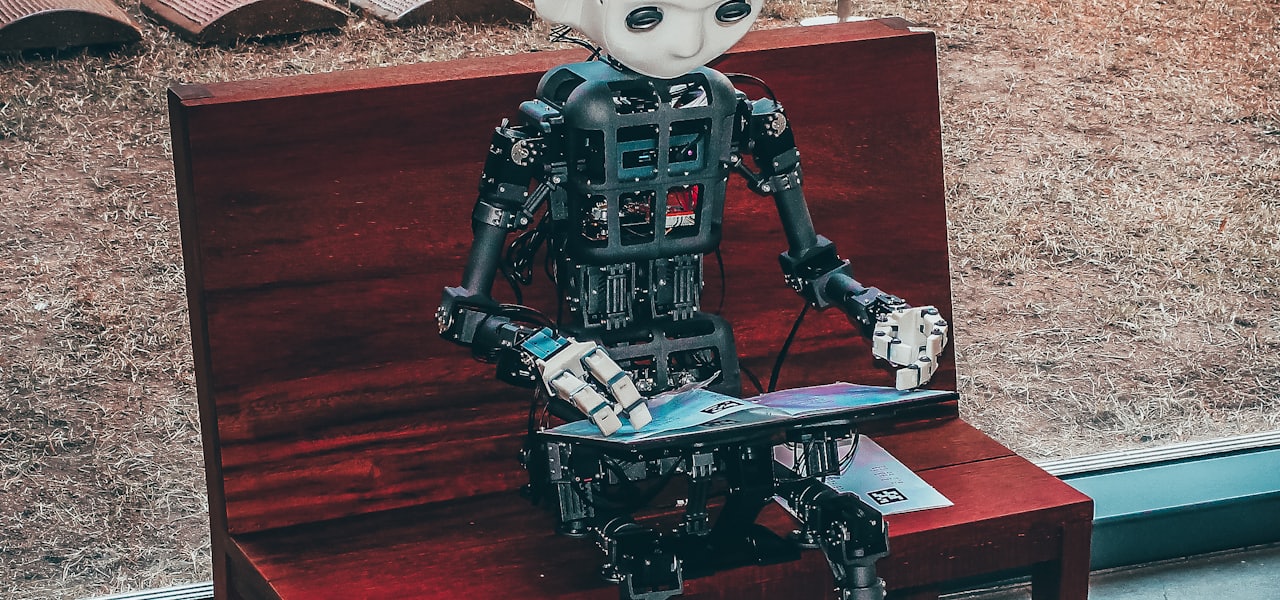
Brain technology, or self-learning know-how systems, defines a technology that employs latest findings in neuroscience. [see also neuro implants] The term was first introduced by the Artificial Intelligence Laboratory in Zurich, Switzerland, in the context of the Roboy project. Brain Technology can be employed in robots, know-how management systems and any other application with self-learning capabilities. In particular, Brain Technology applications allow the visualization of the underlying learning architecture often coined as "know-how maps". == Research and applications == The first demonstrations of BC in humans and animals took place in the 1960s when Grey Walter demonstrated use of non-invasively recorded encephalogram (EEG) signals from a human subject to control a slide projector (Graimann et al., 2010). Soon after Jacques J. Vidal coined the term brain–computer interface (BCI) in 1971, the Defense Advanced Research Projects Agency (DARPA) first starting funding brain–computer interface research and has since funded several brain–computer interface projects. That market is expected to reach a value of $1.72 billion by 2022. Brain–computer interfaces record brain activity, transmit the information out of the body, signal-process the data via algorithms, and convert them into command control signals. In 2012, a landmark study in Nature, led by pioneer Leigh Hochberg, MD, PhD, demonstrated that two people with tetraplegia were able to control robotic arms through thought when connected to the BrainGate neural interface system. The two participants were able to reach for and grasp objects in three-dimensional space, and one participant used the system to serve herself coffee for the first time since becoming paralyzed nearly 15 years prior. And in October 2020, two patients were able to wirelessly control an operating system to text, email, shop and bank using direct thought through the Stentrode brain computer interface (Journal of NeuroInterventional Surgery) in a study led by Thomas Oxley. This was the first time a brain–computer interface was implanted via the patient's blood vessels, eliminating the need for open brain surgery. Currently a number of groups are exploring a range of experimental devices using brain–computer interfaces, which have the potential to fundamentally change the way of life for patients with paralysis and a wide range of neurological disorders. These include: as Elon Musk, Facebook, and the University of California in San Francisco. The systems. This technology is also being explored as a neuromodulation device and may ultimately help diagnose and treat a range of brain pathologies, such as epilepsy and Parkinson's disease.